The Door Speaks Twice: A Practical Bilingual Welcome Audit for Ruthin
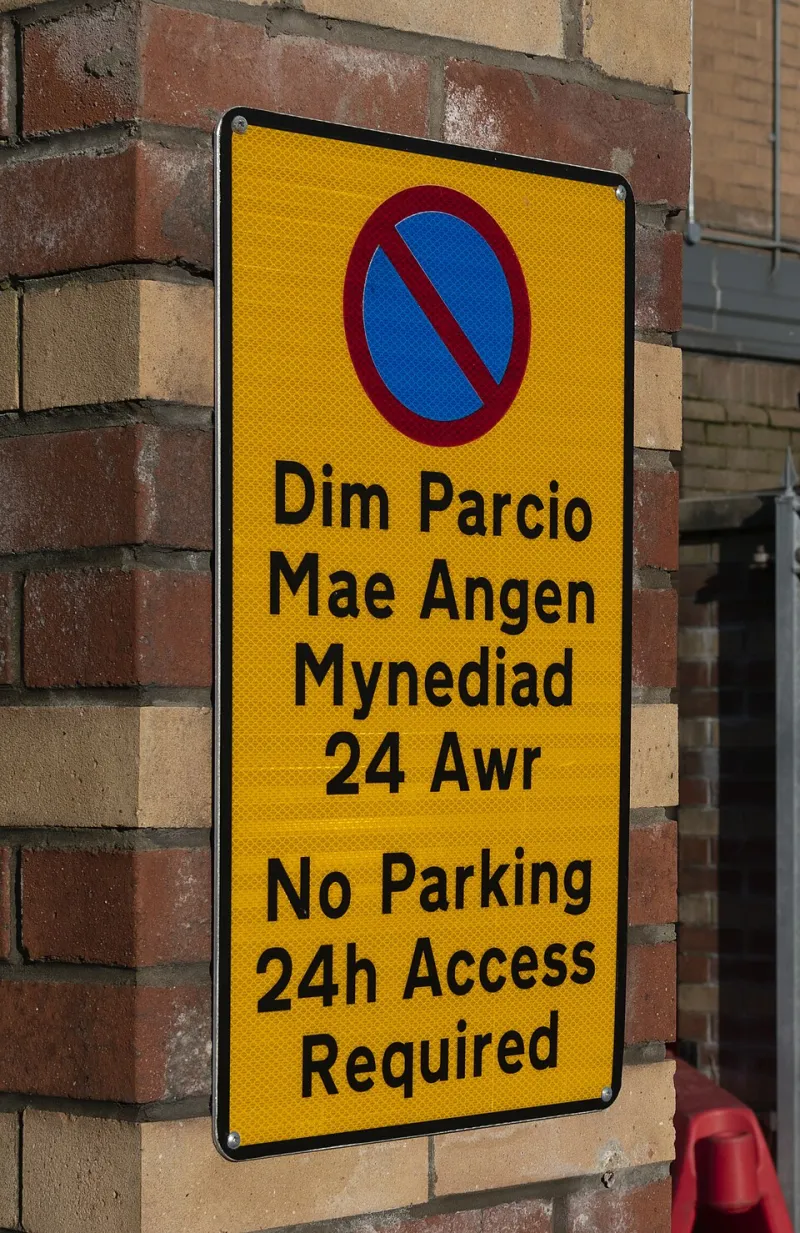
Photo: Dominic Nelson, CC BY-SA 4.0, via Wikimedia Commons
A bilingual welcome is not a translation stapled on at the end. In Ruthin, where Welsh and English sit alongside each other in shops, schools, kitchens and chapels, it is a signal that both languages belong at the door. For small groups and community organisations, the good news is that this does not require a fluent Welsh speaker on every shift. It requires a bit of thought about what a visitor sees, hears and has to fill in before they feel expected.
Start before the doorstep
Before anyone reads a notice, they see the building. Is there anything at eye level that says croeso as well as welcome? A bilingual sign is a start, but only if it is doing real work. If the Welsh word is tiny, stuck in a corner, or appears only as a decorative flourish, it sends a quieter message: Welsh is here, but English is the main event.
Check the practical things first. Opening hours. The doorbell. Which entrance is open. Where the loo is. If those details are English-only, a Welsh-speaking visitor may still feel they are entering an English space, however warm the greeting inside. The aim is not to translate every scrap of paper. It is to make sure the important information is available in both languages, at the same size and in the same place.
The first ten seconds
Greetings do a lot of heavy lifting. A volunteer who can offer bore da in the morning or prynhawn da in the afternoon is already telling people that Welsh is welcome here. So is a simple croeso at the door. You do not need to be fluent to be hospitable. Learn three phrases well and use them naturally: bore da, prynhawn da, diolch.
The trickier moment is what comes next. Rather than asking do you speak Welsh? — which can feel like a test — try offering a choice. Something like: Would you like to carry on in Welsh or English? That puts the visitor in charge. If no one on the rota can hold a conversation in Welsh, say so warmly and offer the bilingual written information you have. Do not let I don’t speak Welsh be the end of the welcome. It can be the start of finding someone who does, or of making sure the next visit is easier.
Paperwork, phones and paper trails
Forms are where bilingual welcome often quietly falls down. A sign-in sheet, a consent form or a referral slip may be the first thing a visitor has to complete on their own. If it is English-only, add a short Welsh introduction at the top and a language preference box. Full translation is ideal, but a clear offer is better than silence. If you use a translation tool, get a Welsh-speaking member or volunteer to check it before it goes live. Official information deserves a human eye.
Phones matter too. A bilingual voicemail does not have to be elaborate. A short croeso and welcome, then a clear instruction about leaving a message, is enough. Keep it brief and make sure the call-back promise is real. The same goes for email footers and text messages. One bilingual line in an email signature is a small change that quietly answers the question: will I be able to use Welsh here?
Event notices should match themselves
A common slip is a bilingual headline on an English-only notice. The event sounds welcoming, but the date, time, access details and cost are only in one language. If you are producing a notice in both languages, keep the information consistent. Do not summarise the Welsh version and give the English version every practical detail. The test is simple: could a Welsh speaker read the Welsh version and know exactly what to expect? Could an English speaker read the English version and feel equally included? Both answers should be yes.
A twenty-minute audit you can actually run
Set aside twenty minutes and walk to your own front door as if you have never been before. Then check five things.
- The approach. From the pavement, can you see a bilingual welcome? Is it clear which door to use?
- The entrance. Are opening hours, the bell and any access information available in both languages?
- The first words. Does someone greet visitors? Is there a natural way to choose Welsh or English?
- The paper. Look at your sign-in sheet, leaflet or form. Would a Welsh speaker know they can use Welsh?
- The follow-up. Check your voicemail, email footer and any text messages. Do they reflect the same welcome?
Write down one small change for each section. Not a full rebrand. One change.
Avoiding the token croeso
Tokenism is when croeso is decoration and everything else assumes English. A genuinely bilingual welcome offers choice. It does not make English speakers feel pushed out, and it does not make Welsh speakers feel like a special request. It says both languages are normal here. Use plain, natural Welsh where you can. Ask Welsh-speaking members to review notices before they go up. And remember that a welcome is not a test of anybody’s language skills — it is a practical offer of hospitality.
Small changes that stick
Add a bilingual line to your email footer and voicemail. Put a language preference box on your sign-in sheet. Print one bilingual welcome page with the key information: what this place is, who it is for, when it is open and how to ask for help. Learn three phrases. Give volunteers who can help in Welsh a simple badge or lanyard. Check your next event notice in both languages before it goes to the printer.
None of this needs a committee or a big budget. It needs a walk to your own front door and an honest look. Open Doors Ruthin is built on the idea that welcome is practical, not performative. A door that speaks twice is not trying to be clever. It is simply making sure that when someone arrives, they already have a language to arrive in.