Sign Here, If You Like: Rethinking the Clipboard at Ruthin's Community Door
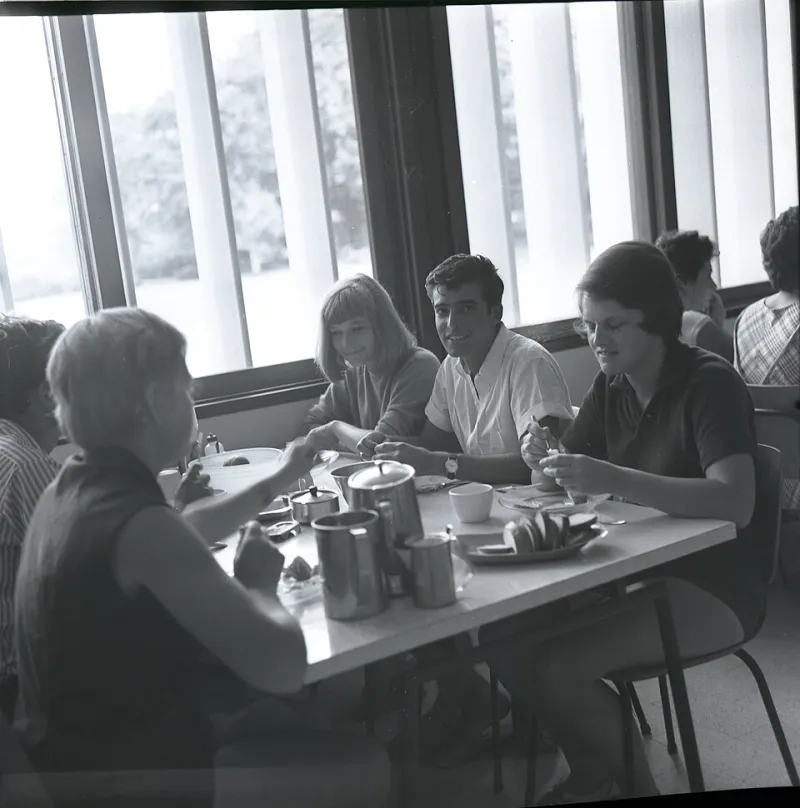
Photo: Boris Carmi, CC BY 4.0, via Wikimedia Commons
Walk into almost any community gathering in Ruthin and there is a good chance the tea urn is not the first thing you meet. It is the clipboard. Sometimes it is held by a friendly volunteer, sometimes it is balanced on a chair with a biro on a string, and sometimes it is a printed sheet with more boxes than a passport application. None of this is done to make life harder. But paperwork has a way of setting the tone before anyone has had a chance to say hello.
The difference between a record and a gate
A sign-in sheet can be genuinely useful. It helps a group know how many people came, it supports fire safety, it can be needed for funding reports, and it may be part of safeguarding arrangements for certain activities. None of that is silly. The trouble starts when the sheet collects everything the group might like to know rather than what it actually needs.
There is a simple test. If nobody signed the sheet, would the event still be able to go ahead safely and lawfully? If the answer is yes, the sheet is probably optional. If the answer is no, the group should be able to explain exactly why. That explanation should take one sentence, not a paragraph of policy language.
For a coffee morning, a craft session or a friendly drop-in, the essential information is often very small: a first name, perhaps a contact number, and an emergency contact if the activity carries any risk. Date of birth, full address, health details and a reason for visiting are rarely necessary just to pass the biscuits. Asking for them can make a warm room feel like an office.
Three questions before anyone prints a form
Before a Ruthin group runs off another stack of sheets, it is worth asking three questions.
First, what is the smallest amount of information we need to run this safely? Write that down. Then cross out anything that is only there because it has always been there.
Second, who will read this, where will it be kept, and when will it be destroyed? People are more willing to share details when they know the answer. A short line at the top of the sheet is better than a folder of small print nobody reads: 'We use this only to contact you about this event and to keep a fire safety record. It is kept in the hall office and shredded after two weeks.' Adjust the details to suit the group, but keep the honesty.
Third, can someone take part without filling it in? If the answer is no, the group needs a very good reason and a clear alternative for anyone who cannot or will not use the form. If the answer is yes, say so on the sheet. A line that reads 'No paperwork needed — just say hello to the volunteer at the door' can change the whole feeling of an entrance.
The no-paperwork route is not a loophole
A no-paperwork route does not mean ignoring safety or safeguarding. It means offering a different way to meet the same need. For a simple social gathering, a volunteer can greet people and keep a simple headcount. For fire safety, a named person can walk the room at the start and note the number of people present. For funding, an anonymous tally can often do the job. For consent, a separate opt-in slip is usually better than burying permission in a registration form.
What matters is that the alternative is visible and easy. Do not make someone announce that they cannot read the form, do not ask them to explain why they would rather not give their address, and do not treat a verbal sign-in as suspicious. The person at the door should be able to say, without a flicker of judgement, 'You can just give me a first name if you like, or I can mark you down as a visitor.'
Explain the why in plain words
Most people are not opposed to sharing a name. They are opposed to not knowing why. A short, spoken explanation works better than any notice. Something like: 'We ask for your name so we know who is in the building if we need to clear it. We do not share it with anyone else. It goes in the folder and is shredded after the event.'
That is not a legal lecture. It is ordinary courtesy. UK GDPR is not a reason to collect more information; it is a reason to collect less and look after it properly. Consent, where it is needed, should be a genuine choice, not a condition of getting through the door unless the activity truly requires it. If a form says 'we will share your details with our partners' without saying who those partners are, it is not really explaining anything.
Small design choices that lower the temperature
A few practical details can make a sign-in desk feel less like a checkpoint. Put the clipboard at a comfortable height, not on a low chair. Attach a pen that works. Use plain English and large print. Mark optional fields clearly, and do not put an asterisk next to every box. Keep the privacy note short and visible. If children are signing in, make sure the adult accompanying them knows what is being collected.
It also helps to separate the register from the consent slip. The register is for safety and numbers. The consent slip is for permission. Mixing them together makes both feel heavier. And if the group uses a QR code or an online form, keep a paper route open. Not everyone has a smartphone, and a digital-only welcome is still a closed door for some.
A small test for the next Ruthin gathering
At the next event, stand near the entrance for ten minutes and watch. Does the clipboard come before the welcome? Do people hesitate? Is there someone available to explain the form without making anyone feel awkward? Could a person take part without writing anything down?
If the sheet is doing more than it needs to, change it. If the explanation is missing, add it. If there is no alternative, create one. The aim is not to abolish paperwork. It is to make sure the paperwork opens the door rather than becoming a second locked entrance. In a town that prides itself on open doors, the first box to tick should always be a warm welcome.