The First Hour Decides It: Inducting New Volunteers in Ruthin Without the Binder
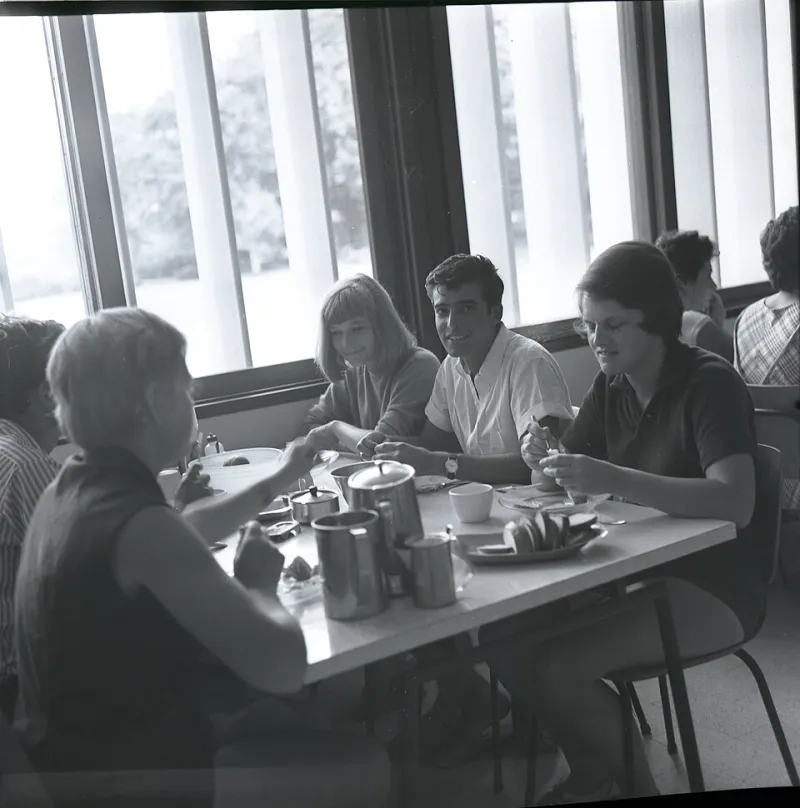
Someone offers to help at a Ruthin lunch club in late January. They mean it. They turn up, slightly early, hovering by the door with a supermarket bag of biscuits because turning up empty-handed felt rude. Somebody waves them towards the kitchen, somebody else asks if they've done the food hygiene course, a third person says they'll be back in a minute and isn't. By March they've quietly stopped coming, and nobody is quite sure why.
That story repeats itself across the town more often than most committees realise. The enthusiasm was never the problem. What went wrong happened in the first hour.
The leaky bucket by the door
Small groups in Ruthin recruit in bursts. A note in the newsletter, a poster in a shop window on Well Street, a shout on the local Facebook page, a mention after the Sunday service. Then a new person actually arrives and the whole thing is improvised. Sometimes they're handed a folder of policies and a lanyard and left to work it out. Just as often they're handed nothing at all, and spend their first shift trying to read the room.
Both outcomes cost the same: a willing person who doesn't come back. And because recruitment is hard, we tend to blame the volunteer rather than the welcome — they weren't committed, they were busy, they were only ever going to do a couple of weeks anyway.
It's worth testing a different explanation. Most people who walk through a community door need roughly four things in the first fortnight: to know what's expected of them, to know who to ask, to have done it once with someone beside them, and to know they can stop. That's a short list. It just needs writing down.
One page beats forty
The single most useful thing a Ruthin group can produce is a one-page what-to-expect sheet. Not a handbook, not a constitution, not an insurance summary. One side of A4.
Ours would cover, in plain sentences:
- Which door. If the side entrance by the bins is the one that's actually open, say so. A locked front door has ended more volunteering careers than apathy ever has.
- What time, and how early is too early. Ten minutes is helpful. Half an hour means someone feels obliged to entertain you.
- Who to ask for by name, plus a mobile number in case the bus is late.
- What to wear and whether aprons, gloves or sturdy shoes are needed.
- Where the loos are, where the kettle is, and whether there's a proper break.
- Roughly how the first hour runs, in three or four lines.
- Getting there. Which bus from Denbigh or Mold, where the nearest parking is, whether the step at the entrance is a problem.
- One reassuring line: you will not be left on your own on the door in your first month.
That last sentence does more work than any policy document. It tells a new person that the group has thought about them.
A name, not a rota
'Ask anyone, we're all friendly' sounds warm and functions as abandonment. New people won't ask anyone. They'll guess, or they'll stand still and hope.
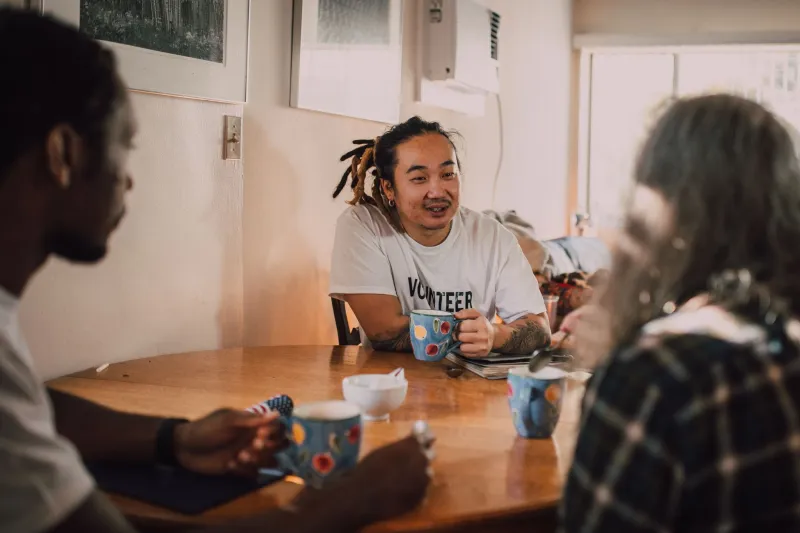
So give every new volunteer a named buddy for their first four shifts. The buddy's job is small and specific: send a text the night before, meet them at the door, sit with them at the break, and be the person who fields the daft questions without sighing. No rota admin, no supervision, no responsibility for anything going wrong.
Rotate the buddy role between three or four established volunteers so it never lands on one exhausted person, and so new people meet more than one face. On a good week the buddy arrangement takes about twenty minutes of someone's time. It is the cheapest retention tool available.
Shadow, then stand alongside
Two shifts of watching, then one of doing it together, and only after that doing it alone. That's the pattern worth aiming for, and it's gentler than it sounds.
Nobody should be handed the keys, the cash tin or the safeguarding phone on their first shift. Nobody should be left holding the door while three regulars disappear into a back room. If the role genuinely needs a DBS check, start it early and say plainly why — and if it doesn't, don't imply that it does, because bureaucracy invented for reassurance is the fastest way to make a volunteer feel untrusted.
Say the words out loud: you're allowed to say no
This is the part most groups skip, and it's the part that keeps people. Tell new volunteers, in as many words, that they can decline a task, leave early, take a week off, or try something and decide it isn't for them. Say it in the first hour and say it again at the end of the first month.
Permission to stop is not an invitation to disappear. It's what makes it possible to say yes to the next thing honestly. A volunteer who feels trapped in a role they've grown to dread will find a reason to leave eventually, and it will look sudden to everyone but them.
Keep the paperwork in proportion
Some things do need covering, and they can be covered in a conversation rather than a folder. A twenty-minute safeguarding chat with a named person to call if something worries them. A single paragraph on not photographing or naming people without consent. The location of the first aid kit and the accident book. Where the risk assessment lives, and the fact that it exists.
All of that fits in half an hour with a cup of tea. What doesn't fit is a two-hour induction on a Tuesday evening, which mostly teaches people that volunteering here is complicated.
The four-week check-in
Fifteen minutes, no forms. What's working, what's clunky, what would you like to try, what would you rather never do again. Then the honest exit line: if this turns out not to be for you, that's completely fine, and there'll be no awkwardness at the door.
Groups that do this tend to discover the same small frictions — a rota that's hard to read, a job nobody enjoys, a cupboard nobody can find — long before those frictions turn into departures.
A checklist worth pinning up
- One-page what-to-expect sheet, updated yearly
- Named buddy for the first four shifts, rotated
- Two shadowing shifts before any solo task
- Explicit permission to decline, rest and stop
- Twenty-minute safeguarding and consent chat
- DBS only where genuinely required, started early
- Fifteen-minute check-in at four weeks
- Somebody to greet them by name at the door
None of that is heavy. It's an hour of preparation, once, and a bit of attention afterwards. Ruthin's pool of willing people is small, warm and worth keeping — and the difference between a volunteer who stays and one who drifts away is usually decided long before anyone gets round to asking what they thought.