Ten Minutes Late and Still Expected: Helping Ruthin's Latecomers Land Softly
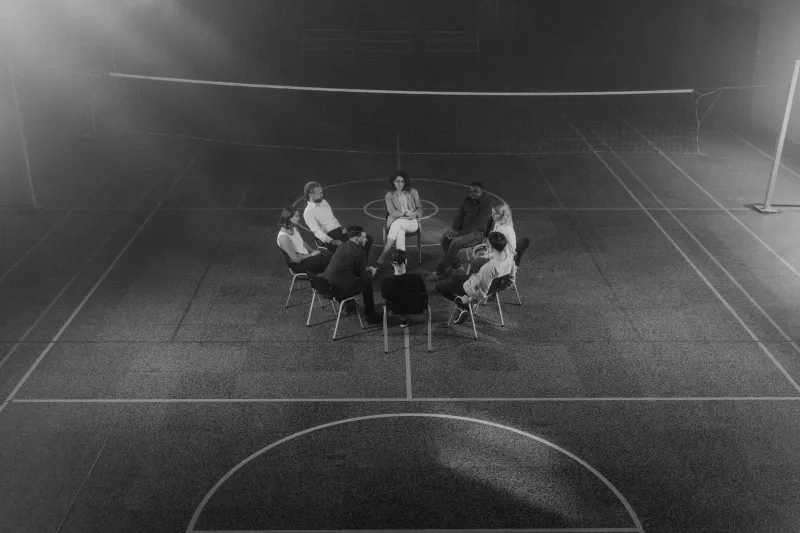
It is ten past seven on a Thursday in November, and the hall is already busy. Chairs are occupied, the kettle has been through its first cycle, and someone is halfway through the notices. Outside on the pavement, a person is hovering, reading the poster for the third time and weighing up whether walking in now is worth the eyes turning.
Most of us have been that person. And most of us, if we run a group, have accidentally designed an event that punishes them for it.
This is not about being late. It is about what happens next. A room that has thought about latecomers is a room that is genuinely open, rather than open only between 7pm and 7.05pm.
Assume the second wave is coming
The first fix costs nothing: stop treating a prompt start as proof of enthusiasm. In practice, any Ruthin gathering that begins at seven will see a steady trickle until twenty past, and a smaller bump after that when the bus from Denbigh lands or a shift finishes.
So build the run of the evening around that. Put the announcements and the housekeeping at both ends rather than only at the top, and keep the first twenty minutes loose enough that someone arriving mid-flow has not missed the one thing they needed to hear.
If there is a sign-in sheet, leave it out and leave it obvious. Nobody wants to interrupt a speaker to ask where to write their name.
Put the welcome where people actually arrive
We tend to greet at the front, near the speaker, because that is where we stand. Latecomers do not arrive at the front. They arrive at the door, in the half-light, with the draught behind them.
Three small things help:
- A person (or a rota of people) stationed near the entrance for the first half hour, not to police anything but to nod, point and hand over a leaflet.
- A clear line of sight from the doorway into the room, so nobody has to guess what they are walking into.
- A small table just inside with the evening's running order, a pen, and a note saying what is happening right now and what comes next.
That last item is worth the trouble. A single sheet headed "You are here" removes most of the awkwardness in about four seconds. It answers the only question a latecomer has: have I missed the point?
Seats that let you in sideways
Row seating is efficient and slightly merciless. If the only free chair is in the middle of a row, a latecomer has to climb over six people and apologise to all of them.
Leave a couple of chairs free at the ends of rows, and keep a small cluster near the back that is deliberately unstyled. Not a naughty corner — a landing zone. Call it what it is when you introduce the evening: there are seats at the back for anyone who needs to slip in, slip out, or take a phone call. Once it is said out loud, it stops looking like a punishment and starts looking like a courtesy.
If your venue is one of the older halls around town, with a squeaky hinge and a door that thumps, prop it slightly or ask whoever is nearest to it to keep an eye out. The sound of a door is the thing latecomers dread most, and it is the easiest thing to fix.
The five-word handover
When someone does come in late, resist the urge to explain the whole meeting. A rushed summary is more disruptive than the arrival.
Try something short instead: "We're on the second question. Tea after." Two facts, no fuss. Then let them sit down.
Brief whoever is greeting to have that sentence ready, plus one more: what to do if they want to catch up properly later. A named person and a time — "I'll be by the urn at half eight" — is worth more than a stack of printed minutes nobody reads.
Rituals beat instructions
Instructions tell people what to do. Rituals show them they belong. The difference matters at the ten-past-seven moment.
A few that work well in small rooms:
- The halfway recap. Whoever is chairing spends sixty seconds summarising where the discussion has got to. It feels redundant to the people who were there. It is gold to the people who were not.
- The open chair. Towards the end, one round of "anything from anyone who came in later?" That single question means nobody has to fight for a turn.
- The slow table. A table that is explicitly not about the main business — leaflets, a jigsaw, a bowl of something — where a person can hover for a minute before committing to a seat.
- The second cup. Whoever makes the tea makes one extra and offers it to the person who arrived last. It is a small kindness and it does the work of an introduction.
None of this needs a committee. It needs somebody to say, once, at the planning stage: what happens if half the room is late?
Ending well matters as much as starting well
A latecomer often leaves early too, and that is fine. Make the exit easy. Sit near the door if you can, keep the coat where you can reach it, and do not make anyone perform a goodbye.
If you are the one running the evening, catch them on the way out if you can, and skip the apology. Nobody needs to be told they were late. They know. What they need to hear is the thing that makes the next visit likely: "Same time next month, and we're starting softer — no notices until half past."
A short checklist for your next gathering
Before the doors open, ask:
- Is there someone by the entrance for the first thirty minutes?
- Can a person arriving at 7.15pm see where to go without asking?
- Are there free seats at the edges?
- Does whoever is speaking know to give a sixty-second recap?
- Is there a named person to catch up with afterwards?
Five questions, twenty minutes of thought, and a door that stays open long after the clock says it should have closed. That is the sort of welcome that does not need a banner. It just needs a bit of planning and someone willing to stand near the draught.