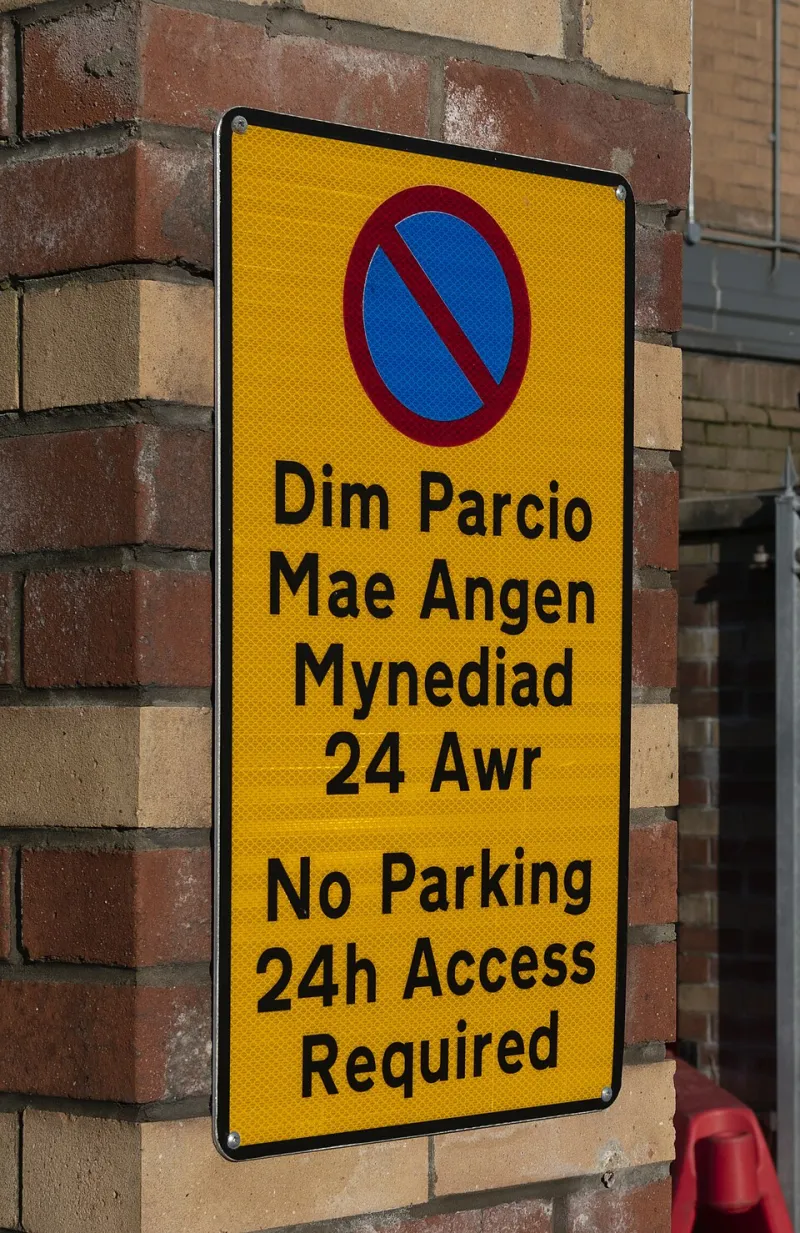
When the Shutter’s Down: Making Ruthin’s After-Hours Messages Do Some Welcoming

Photo: J Taylor, CC BY-SA 2.0, via Wikimedia Commons
Most of us have done it: walked up to a community building, tried the handle, peered through the glass at a stack of chairs and a noticeboard, and thought, “Right. Now what?” It’s an ordinary Ruthin moment, but it’s also the moment when a helpful service can accidentally feel like a dead end.
Opening hours are only part of the story. People turn up when they can — after a shift, between appointments, on the way back from school, or on a Saturday when the town is busy but the office isn’t. The question for any Ruthin help point in 2026 isn’t just “Are we open?” It’s “What does someone find when we’re not?”
Start with what the doorstep actually says
Stand outside your own building one evening and read it like a stranger. Can you see the opening hours from the pavement? Is the phone number big enough to copy without squinting? Does the sign say what you actually do, or does it assume everyone already knows?
A simple “If we’re closed” panel in the window can do a lot of quiet work. It doesn’t need designing by a committee. It needs three things: the next time you’re open, a phone number someone can ring, and one or two sensible alternatives nearby. Something like: “Closed now. Open Tuesday 10am–1pm. For urgent help call [number]. For advice, try Ruthin Library or Citizens Advice.”
That last bit matters. A locked door is easier to accept if it points somewhere else. It feels less like a rejection and more like a handover.
The answerphone is a front door too
If the phone rings and nobody picks up, the message that follows is doing front-of-house duty. A rushed, mumbled greeting with no times and no alternatives is the audio version of a blank stare.
Keep it short, warm and specific. Say the organisation’s name, the days you’re usually open, when someone will next check messages, and where else people can go in the meantime. If you’re a small group without staff cover, be honest: “We’re run by volunteers and check messages on Wednesdays and Fridays.” That’s not a weakness. It sets expectations.
One important line belongs on every message: if someone is at immediate risk or needs emergency help, they should call 999. For health concerns that aren’t life-threatening, NHS 111 is the usual route in Wales. After that, give the practical local options — library, council services, Citizens Advice, a nearby warm space — rather than a long list that nobody can remember.
A card in the window beats a shrug
Out-of-hours referral cards are one of the cheapest welcome tools going. Print a batch the size of a postcard, slot them into a weatherproof holder by the door, and keep the wording plain. Include your name, your usual opening hours, a phone number, a website address, and two or three alternative contacts.
Don’t overload it. A card that lists fourteen services is a card nobody reads. Choose the ones that genuinely fit the questions you get most often. If people regularly ask about benefits, housing or food support, say so on the card and point them to the right place. If your building is used for evening groups, list the nights when the lights are usually on.
The same information can go on the back of the door, inside a porch, or on a small noticeboard that’s visible after hours. In Ruthin, where plenty of people pass on foot, a clear window message often works harder than a social media post.
QR codes: useful only if they actually work
A QR code can be a brilliant shortcut or a small disappointment in black and white. Before you stick one up, test it on an ordinary phone, on the pavement, in the rain, with the door closed. Then test it again on a different phone.
Send people to a simple page that opens without an app, a login or a download. If the link goes to a PDF that takes ages to load, or a form that asks for fifteen fields before saying hello, it isn’t really an out-of-hours welcome. Put the plain web address underneath the code as well, so people can type it if the camera won’t play ball.
And keep the content honest. If your online contact form is only checked once a week, say so. If there’s a crisis number, put it near the top, not buried under a paragraph about office closures.
The five-minute monthly check
After-hours signposting drifts out of date quickly. A phone number changes, a session moves, a QR code points to a page that no longer exists. None of that is dramatic, but it all adds friction for the person standing at the door.
A short monthly check keeps it human:
- Read the window sign from the street. Is it still accurate and visible?
- Ring the answerphone. Does it give the right hours and alternatives?
- Test every QR code and web link on a phone.
- Check the referral cards are stocked and dry.
- Make sure emergency and NHS 111 wording is still correct.
- Ask one volunteer or visitor to try the door and report back.
That’s it. No budget, no new software, no grand relaunch. Just a small routine that stops the closed door from telling the wrong story.
Leave the door in a better mood
A building can be shut and still be welcoming. The trick is to treat the doorstep, the phone message and the window card as part of the same conversation. People in Ruthin shouldn’t have to guess where to go next just because the latch is down.
If you run a community venue or a small organisation, try one change this week. Rewrite the answerphone. Print a dozen referral cards. Put a plain “if we’re closed” line in the window. Then ask someone who doesn’t know your building to tell you what it says. Their answer will be more useful than any policy document — and a good deal kinder than a locked door with nothing behind it.