Borrow a Buggy, Learn a Lot: Ruthin's Family-Friendly Door Check
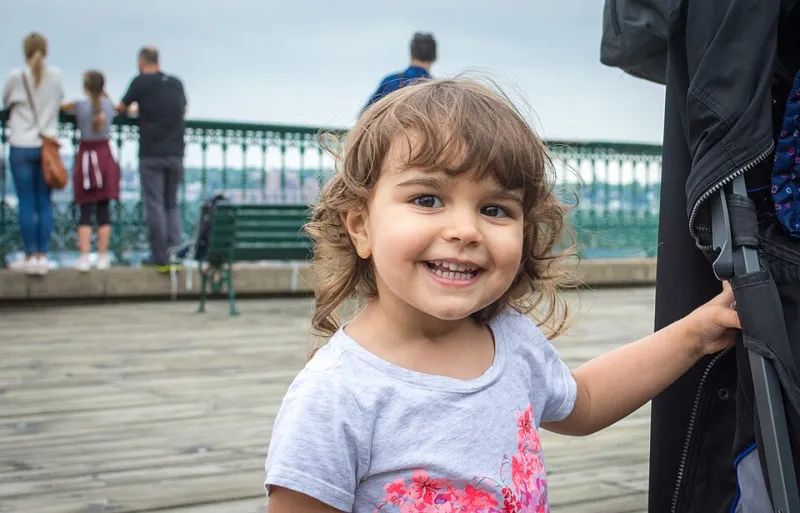
Photo: Wilfredor, CC BY-SA 4.0, via Wikimedia Commons
Most community spaces are checked by adults on foot. That is a sensible starting point, but it misses a lot. A parent or carer arriving with a baby, a toddler and a changing bag is not just walking through your door. They are steering, parking, negotiating, entertaining and keeping one eye on the nearest exit. If your venue only works for people with two free hands, it is not quite open to all yet.
So here is a practical test that costs nothing and tells you plenty: borrow a buggy. Not to make a fuss, and not to mark anyone down. Just to follow the route a family actually takes. Push it through the entrance, park it while you pretend to read a noticeboard, sit down with it beside you and see what happens next.
Open Doors Ruthin is built around the idea that welcome is practical before it is polished. The buggy test is a good example. It turns a vague aim into a short list of things you can check, fix or ask about before the next session.
Start outside, before the door
Begin on the pavement. Is there space to step aside with a pushchair while someone else comes out? Is the route from the nearest bus stop or car park reasonably level, or does it involve a kerb that catches small wheels? You do not need to solve every street-level issue, but it helps to know what people face before they reach you.
Look at your signage from buggy height. A parent pushing a pram is often looking down, not up. If the only clue about which door to use is a high-mounted sign, consider a temporary A-board or a simple laminated sheet at a lower level. It does not have to be expensive. It does have to be visible.
If your entrance has steps, is there a clear alternative route? If there is a ramp, is it wide enough for a pushchair and a person side by side? If the answer is no, that is useful information. You can mention it in advance, offer a hand, or arrange for someone to meet families at the door.
The first three metres inside
Once through the door, the first few metres tell you a lot. Is there somewhere to pause without blocking the entrance? A buggy needs a parking spot that is not in the middle of the walkway and not tucked behind a fire door. A simple painted line or a small sign saying pushchairs can park here can make a surprising difference.
Then think about the handover. A parent arriving at a welcome desk often has one hand on the pushchair, one on a bag and no spare hand for a clipboard. Keep forms short, offer a seat, or let them take the paperwork away. If you have a welcome sheet, make sure it can be read while standing with a wriggling child. Short sentences and clear headings are kinder than dense paragraphs.
Waiting without wrestling
Waiting is where family-friendly spaces often come unstuck. A queue that feels fine to an adult can feel like a small endurance event when a toddler has spotted a tempting display or a precarious plant. Where possible, create a waiting corner with a couple of small chairs, a low table and something to look at. It does not need to be a soft play area. A basket of books, a few animal figures or a simple colouring sheet can buy everyone a calmer minute.
Check the floor too. Is there space to park a buggy beside a chair rather than leaving it in the doorway? Are there sharp corners at toddler height? Is there a radiator, cable or stack of leaflets that a curious child will make for? Small adjustments are often enough. Move the leaflet stand, put the cable tidy in, leave a clear path.
Changing, toilets and the honest bits
Not every small group has a changing facility, and that is okay. What matters is that people know before they arrive. If there is a baby change, where is it? Is it in the accessible toilet, the ladies, or a separate room? Is there a bin? If there is no changing space, can you say so clearly and point to the nearest option? A short line on your website or noticeboard is better than a surprise at the wrong moment.
While you are checking, look at the toilet route with a buggy. Can it be reached without squeezing past tables? Is there somewhere safe to leave a pram outside the cubicle? If not, can a volunteer hold a door or keep an eye on the pushchair? These are the quiet bits of welcome that people remember.
The small things that signal welcome
Family-friendly does not mean child-centred chaos. It means a space where children are expected and parents are not made to feel apologetic. A few small chairs, a low shelf of books, a box of chalk or a basket of toys can help. So can a simple line in your welcome chat: children are welcome here, and nobody minds a bit of noise.
Think about the exit as well. Leaving is often harder than arriving. A child who has been happily playing may not want to go. If there is a clear place to put coats on, a spare minute to gather toys and a volunteer who says goodbye without rushing, the whole visit ends better.
A simple buggy audit checklist
Before your next open-door session, try this quick check:
- Can a pushchair reach the entrance without steps or a tight squeeze?
- Is the door easy to hold open while pushing a buggy?
- Is there a clear, safe place to park a pram inside?
- Can someone read your welcome information while standing with a child?
- Is there a waiting spot with a small chair or something to do?
- Are walkways clear of cables, leaflet stands and low hazards?
- Do you know and share your changing facilities, or the nearest alternative?
- Can a buggy reach the toilets without blocking a fire route?
- Are children mentioned in your welcome, not just tolerated?
- Does leaving feel calm rather than like a quick getaway?
You do not need to fix everything at once. Pick the two changes that would make the biggest difference, write them down and ask a parent or carer what they would add. The best audits are not inspections. They are conversations with a clipboard nearby.
Ruthin's community spaces are at their best when they feel like places people can bring their whole selves through the door. Sometimes that means bringing a buggy, a nappy bag and a very opinionated two-year-old. Test for that, and the welcome gets better for everyone.