The Smallest Room and the Biggest Tell: Auditing Welcome in Ruthin
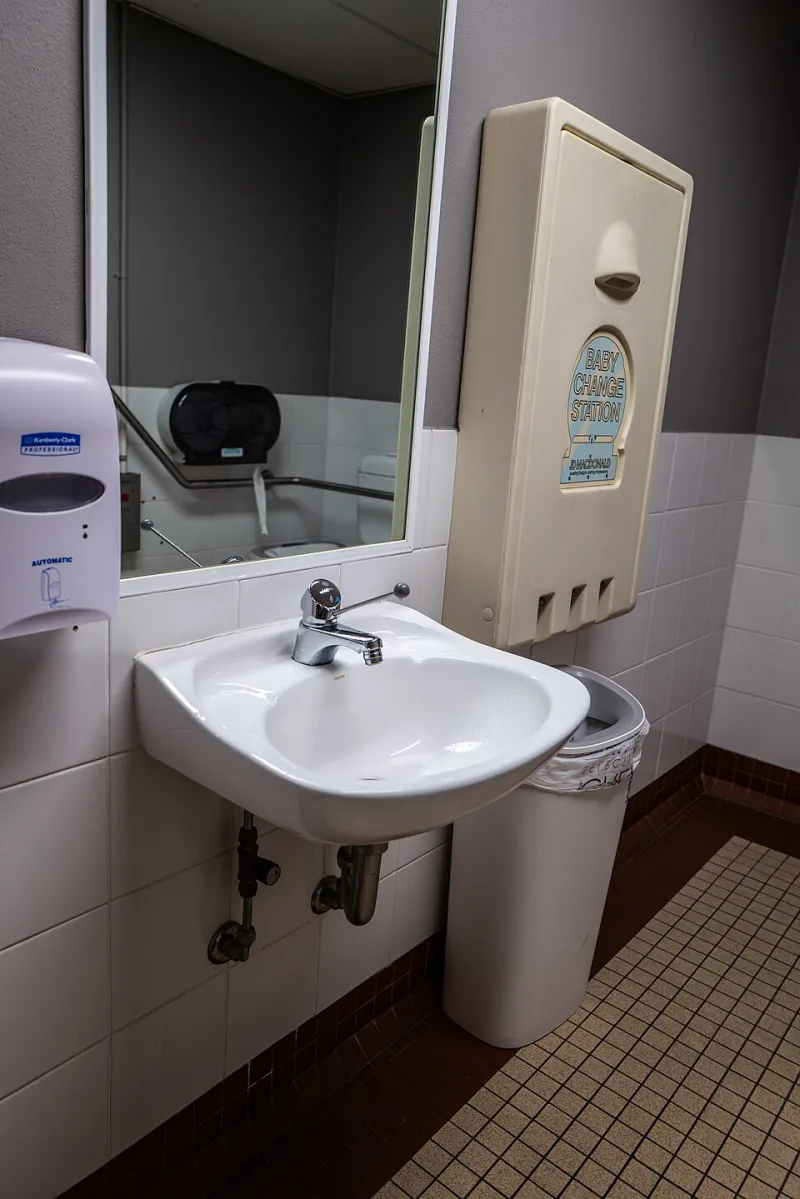
Photo: John Robert McPherson, CC0, via Wikimedia Commons
You can have the friendliest greeter in Ruthin, a proper brew on the go and a poster that says everyone is welcome. Then someone asks where the loo is, and the whole thing wobbles. The smallest room in the building has a funny way of telling the truth about how open a place really is.
This is not about pointing fingers at hard-working volunteers or venue managers. Most community spaces in and around Ruthin are run on goodwill, tight budgets and borrowed time. But if we are serious about open doors, the toilet check belongs in the same conversation as the welcome desk, the ramp and the kettle. It is a practical audit, not a moan.
Start at the door, not the sink
A good toilet audit begins before you get inside. Can a first-time visitor find the loo without having to interrupt anyone? Is there a sign at the entrance, or at least a clear clue near the main room? Does it say ‘toilets’ rather than ‘facilities’, and does it point left or right rather than leaving people to guess?
In older buildings, the answer is often ‘down the corridor and ask for a key’. That is not a crime. But it is a test of welcome. If the key lives behind a bar, in an office or with whoever happens to be on duty, the visitor has to ask a small, slightly awkward question. Some people will not ask. They will simply leave early, or decide not to come back.
A simple fix is a laminated sign at the main door: ‘Toilets this way. Key available from the welcome table.’ It takes five minutes and saves a hundred small hesitations.
The sign is part of the welcome
Signage is where many venues accidentally make the loo feel like a favour rather than a facility. Tiny handwritten notes, arrows that point to a cupboard, and symbols that assume everyone knows the building layout all add friction.
A useful Ruthin check is to walk in as if you have never been there before. Can you see the toilet sign from the main gathering space? Is the lettering big enough for someone with low vision? Is there a symbol as well as words? If the venue uses bilingual signage, does the Welsh and English work equally well, or has one been squeezed into a corner?
And while you are looking at signs, check the door itself. Is it obvious whether it is locked or free? A simple ‘engaged’ slider, a working lock and a clear handle make a surprising difference. Nobody wants to be the person rattling a door in a community hall.
Clean enough to trust
Cleanliness is not about gleaming tiles and fancy hand wash. It is about the basics: paper, soap, a bin, a dry floor and no unpleasant surprises. A toilet that is visibly checked during an event feels cared for. One that is left to fend for itself until Monday tells a different story.
A practical routine helps. Put a named person on a mid-session check, not to deep clean but to restock paper, wipe the sink and empty the bin if needed. A small checklist on the back of the door or on a clipboard nearby can normalise it without turning volunteers into janitors. In shared buildings, agree who is responsible and when.
This is also where small organisations can ask for help. A local cleaning firm, a church group or a nearby business may be glad to sponsor a box of supplies. It is not glamorous, but it keeps the welcome honest.
Access is more than a wide doorway
An accessible toilet is not just a room with a wider door. It needs grab rails that are actually fixed, a turning space that works, an emergency cord that reaches the floor and a lock that can be opened from outside if needed. If the room doubles as a storage cupboard, that is worth noticing. Brooms and spare chairs can quietly turn an accessible loo into an obstacle course.
In Ruthin, as elsewhere in North Wales, some older venues rely on a RADAR key. That is fine if the key is available without a treasure hunt. If visitors need to ask at an office that closes at four, the access is not really there for an evening event. A clearly advertised key, kept where a greeter can reach it, is a simple improvement.
Gender-neutral provision matters too. A single toilet labelled ‘toilet’ rather than ‘ladies’ or ‘gentlemen’ is often the easiest fix in a small venue. It helps trans and non-binary people, parents with children of a different gender, carers and anyone who simply wants to use the loo without a committee meeting in their head.
Baby changing and period products
If a venue says it is family-friendly, the baby changing check should be quick. Is there a changing table that is safe and clean? Is it in the accessible toilet, and if so, does that block the room for someone who needs it? Is there a bin that is actually emptied? A folded mat on a wet floor is not a changing facility.
Period products are another small tell. A box in the toilet, freely available, is not a luxury. It is practical help. It can be as simple as a basket of pads in the cubicle with a note saying ‘take what you need’. If the budget is tight, ask local groups or a community fund. The point is that nobody should have to ask a stranger at the welcome desk for something so ordinary.
The key question
If the answer really is ‘down the corridor and ask for a key’, make that answer kind. Brief whoever is on the door. Put the key on a bright tag. Say ‘of course, it’s just here’ rather than ‘you’ll have to ask at the bar’. If the toilet is upstairs, say so before the visitor climbs. If it is locked after a certain time, put that on the sign.
Small scripts help. ‘The loo is just through there on the left. The key is here, and I’ll be right here when you get back.’ That is a welcome, not a security procedure.
A five-minute audit you can actually do
You do not need a clipboard and a hi-vis jacket. Walk the route from the main entrance to the toilet. Note the signs, the door, the lock, the paper, the soap, the bin, the lighting and the floor. Check the accessible toilet separately. Look for baby changing and period products. Ask a volunteer who has never used that building to do the same walk and tell you where they hesitated.
Then pick two fixes. Not twelve. Maybe it is a clearer sign and a restock box. Maybe it is a key on a hook by the welcome table. Maybe it is moving the spare chairs out of the accessible loo. Small, specific changes are more likely to stick than a grand plan that nobody has time to deliver.
When the answer is ‘not here’
Some venues genuinely cannot offer a public toilet. That happens in hired rooms, temporary spaces and buildings with plumbing from another era. The honest response is to say so clearly and offer the next best thing: the nearest public toilet, a nearby café that welcomes visitors, or a partner venue with access.
Open Doors Ruthin is not in the business of naming and shaming. We are in the business of noticing. If a Ruthin group cannot fix its loo this month, it can still fix the sign, the key and the explanation. That is often enough to keep someone in the room.
The smallest room is not small. It is where dignity, practicality and welcome meet. Get it right, and the open door stays open a little longer.