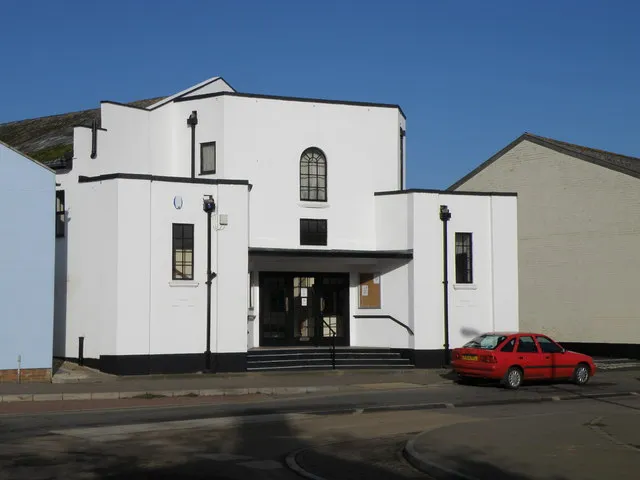
The Ramp Is Only Half the Job: A Ruthin Walk-Through on What 'Open to All' Means
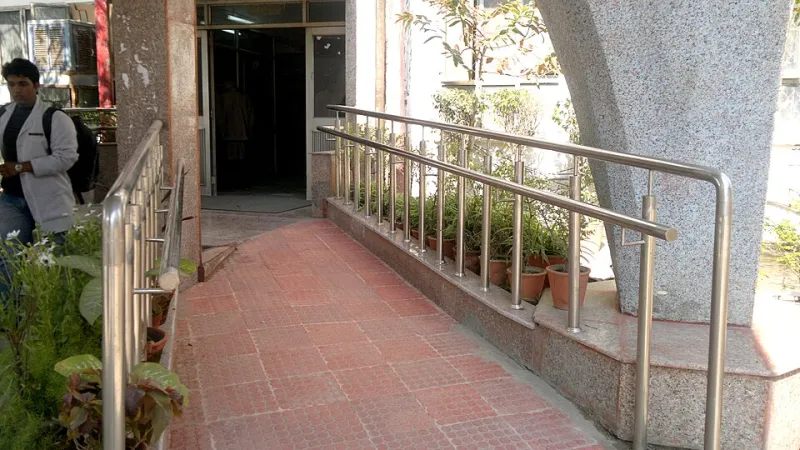
Photo: Dr Satendra, CC BY-SA 3.0, via Wikimedia Commons
There's a phrase that gets used a lot around here, and we use it ourselves: open to all. It's on posters, it's in the intro paragraphs of newsletters, it's said cheerfully at the door. It's a good phrase. It's also a promise, and promises are testable.
So over the past few months we've been quietly paying attention — not as inspectors, nobody asked us to do that — but as people who turn up to things and notice what happens. We've watched who gets through the door easily and who doesn't, and we've asked a few residents what would make the difference between trying and not bothering.
What follows is opinion, clearly labelled as such. But it's opinion grounded in what people have actually told us.
The pavement is the first door
Access conversations often start at the threshold of a building, which is already too late. In Ruthin, the journey matters more than the entrance. Slopes on the square, cambered pavements, a dropped kerb that isn't where you need it, the stretch of road with no pavement at all between the village hall and the nearest parking — these are the things that decide whether someone gets as far as your front step.
A simple rule for organisers: if your publicity mentions a car park, mention the route from it. "Two minutes, level, dropped kerb by the post office" tells someone more than any accessibility statement.
Step-free isn't a yes-or-no
A number of venues around town are genuinely good on this — flat entry, wide doors, an accessible loo that hasn't become a storage cupboard. Others have a ramp that was clearly added with the best will in the world and then never revisited. Ramps that are too steep. Ramps with a lip at the top. Ramps that are blocked by a bin on a Tuesday.
For people who use wheels, sticks or a frame, a ramp that sort of works is often worse than a step, because it invites the assumption that access has been solved.
The cheap fix here is a tape measure and twenty minutes. Check the gradient, check the gap at the top, check that the accessible toilet is unlocked and not doubling as a store room for chairs. Then write it down and put it on your website in plain words. "Step-free entry via the side door on Park Road" is worth more than a logo.
Hearing loss is the invisible one
We're a noisy species in community settings. High ceilings, hard floors, twenty conversations at once, a speaker without a microphone and a tea urn that sounds like a jet engine. For someone with hearing loss, that room is exhausting even when it's welcoming.
Loops help when they're switched on and signed — a surprising number are installed, rarely checked, and never mentioned. But the more useful interventions cost nothing: face people when you speak, don't hold forth from the kitchen doorway, keep background music off during announcements, and repeat the important bits at the end.
If your group is bigger than a dozen people, get a small portable mic. It's a hundred-odd pounds and it changes the evening for anyone who's been nodding along without catching a word for the last two years.
Anxiety is an access need too
Not everyone who is put off by a community event has a physical barrier in their way. Plenty of people have told us they've stood outside a hall, heard the noise, and turned round.
These are the fixes people mention most often. A named person to meet at the door. A published start and finish time, so arriving late doesn't feel like an entrance. Somewhere to sit that isn't in the middle of the room. The option to leave without a scene. Knowing in advance whether there'll be a circle of chairs, a sign-in sheet, or someone with a clipboard asking questions.
All of that can go in one short paragraph on a poster. "Come in, sit where you like, no need to introduce yourself, leave whenever you want." It reads as nothing. It isn't nothing.
Carers and the cost of an hour out
A carer's access needs are rarely their own. Can I bring the person I look after? Is there a quiet corner if they need one? Is the session long enough to be worth the arranging, short enough to fit between medication times? Is there a loo with a changing bench, or a hoist, or just space enough for two adults?
Groups that have thought about this tend to say so in their publicity and get a quiet, loyal following as a result. Groups that haven't tend to wonder why the same faces never come back.
A short checklist for small organisations
None of this requires a consultant. It requires an hour and a bit of honesty.
- Walk your own route from the car park and from the nearest bus stop, in the rain, and note every obstacle.
- Measure your entrance, your ramp and your toilet door. Publish the numbers in plain English.
- Confirm the accessible toilet is unlocked, uncluttered and usable.
- Check the hearing loop works. Then put a sign up saying you have one.
- Write a "what to expect" paragraph for your publicity: room layout, noise level, whether there's a charge, whether you'll be asked to introduce yourself.
- Ask one person who doesn't currently attend what stops them. Then act on it, even if it's just the chairs.
- Review it next year. Buildings drift, bins move, ramps stay blocked.
What openness actually costs
Almost nothing, in cash terms. A microphone, a sign, a paragraph of plain words, a rethink about where the chairs go. The expensive things — a lift, a Changing Places facility, a full refurbishment — are genuinely hard for small organisations and nobody should pretend otherwise. But most of the gap between "we welcome everyone" and "everyone can actually come in" is made of small, stubborn, cheap details that nobody has got round to.
"Open to all" is a good phrase. It becomes a true one when someone standing outside in the cold can believe it before they push the door.