Before You Knock: Making Ruthin’s Open-Door Sessions Honestly Open
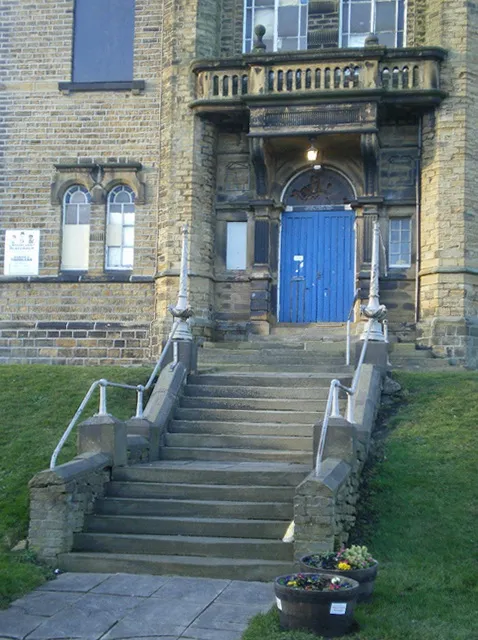
Photo: Alexander P Kapp, CC BY-SA 2.0, via Wikimedia Commons
There is a particular moment that happens outside community buildings in Ruthin. You have walked up the path, maybe checked the times twice, and now you are standing in front of a door with your hand hovering somewhere between knocking and leaving. The poster said ‘drop-in’. The door is closed. A faint clatter of cups comes from inside. Is that an invitation, or a private party you have accidentally approached?
That small hesitation is worth taking seriously. If a group has gone to the trouble of opening its doors, the last thing it wants is someone turning away because the wording left them guessing. And yet ‘open door’ can mean almost anything: come whenever, book first, ring ahead, turn up and wait, or pop by only if you already know someone.
This is not about pointing fingers at hard-working volunteers. It is about making the invitation as warm as the welcome inside.
What ‘drop-in’ is quietly promising
In everyday speech, a drop-in session sounds relaxed. You drop in. You do not commit, you do not book, and you do not need a reason beyond curiosity. That is the promise the phrase makes.
The trouble starts when the reality is more structured. Perhaps the group has limited seats. Perhaps a specialist adviser is only there for the first hour. Perhaps the door is locked for safety and someone has to buzz you in. None of those things are unwelcoming, but a visitor cannot see them from the pavement.
The test is simple: could a stranger read your publicity and know exactly what to do at the door? Not the general idea — the actual next step.
Words that help, and words that hedge
Some phrases do a lot of quiet work. ‘No need to book’ is clear. ‘Just turn up’ is clearer still. ‘Ring the bell and someone will let you in’ removes the last scrap of doubt.
Other phrases hedge without meaning to. ‘Please contact us for details’ can sound like a gate before the gate. ‘Sessions run on a drop-in basis, subject to availability’ is accurate but leaves a nervous visitor wondering whether they will be turned away. ‘Referral preferred’ is enough to make some people assume they are not eligible.
A useful rule of thumb: put the action before the condition. ‘Turn up and ring the bell. If it is busy, we will find you a seat or a time to come back’ tells someone what to do first and what happens next. That is far more inviting than a sentence that begins with what might go wrong.
A five-minute audit from the pavement
Groups often audit their welcome from the inside, where everything feels obvious. Try it from the outside instead. Stand where a visitor would stand, ideally on a normal weekday when the hall is not set up for an event.
Ask yourself:
- Can I see the entrance from the street, or is it round the back past the bins?
- Is there a sign at the door, or only a poster on a noticeboard by the square?
- Does the sign say what happens today, or only what the group is called?
- If the door is closed, do I know whether to knock, ring, or wait?
- Is there a phone number I could use without feeling like I am causing a fuss?
- Would I know whether children, carers or wheelchair users are genuinely catered for, or just generally welcome?
If any answer is ‘I am not sure’, that is the place to start. A laminated sheet at eye level often does more than a hundred words on a website.
Scripts that do not sound like a bouncer
Volunteers are the front door in human form. A script does not have to be formal, but it helps if everyone is saying roughly the same thing.
Something like: ‘Hello, come in. Are you here for the drop-in? The kettle is on — take a seat wherever you like. If you need a quiet word, we can go through to the back.’ That covers arrival, reassurance and choice in three sentences.
For a session that does need booking, try: ‘We are full today, but I can take your name and ring you tonight with the next date. Would that work?’ It is honest without being a closed door.
And for the visitor who arrives early, late or flustered — which is most of us at some point — a simple ‘You are in the right place’ does a surprising amount of work.
Small examples for small groups
A craft group in a church hall might worry that ‘drop-in’ sounds too casual for its members. It can still say: ‘Come for as long as you like. No need to bring anything. Ring the side bell if the main door is shut.’
A advice session with limited appointments could publish: ‘First come, first served from 10am. If we are full, we will book you in for the following week before you leave.’ That is a drop-in with a clear edge, not a vague promise.
A coffee morning with a toddler corner might add: ‘Prams welcome. There is step-free access at the rear.’ It is practical, specific and quietly inclusive.
The three-second decision
People decide whether a place is for them before they get through the door. The decision is made from the pavement, the poster and the half-heard sound of voices inside.
Open Doors Ruthin is built on the idea that a welcome should be more than a phrase on a leaflet. The most useful thing any group can do this winter is to read its own wording as if it had never been inside the building. Then change the one line that makes a stranger pause.
After all, an open door is only truly open when someone outside can tell what to do with it.